KUALA LUMPUR

How Perspective Rendering Enhances Architecture & Real Estate

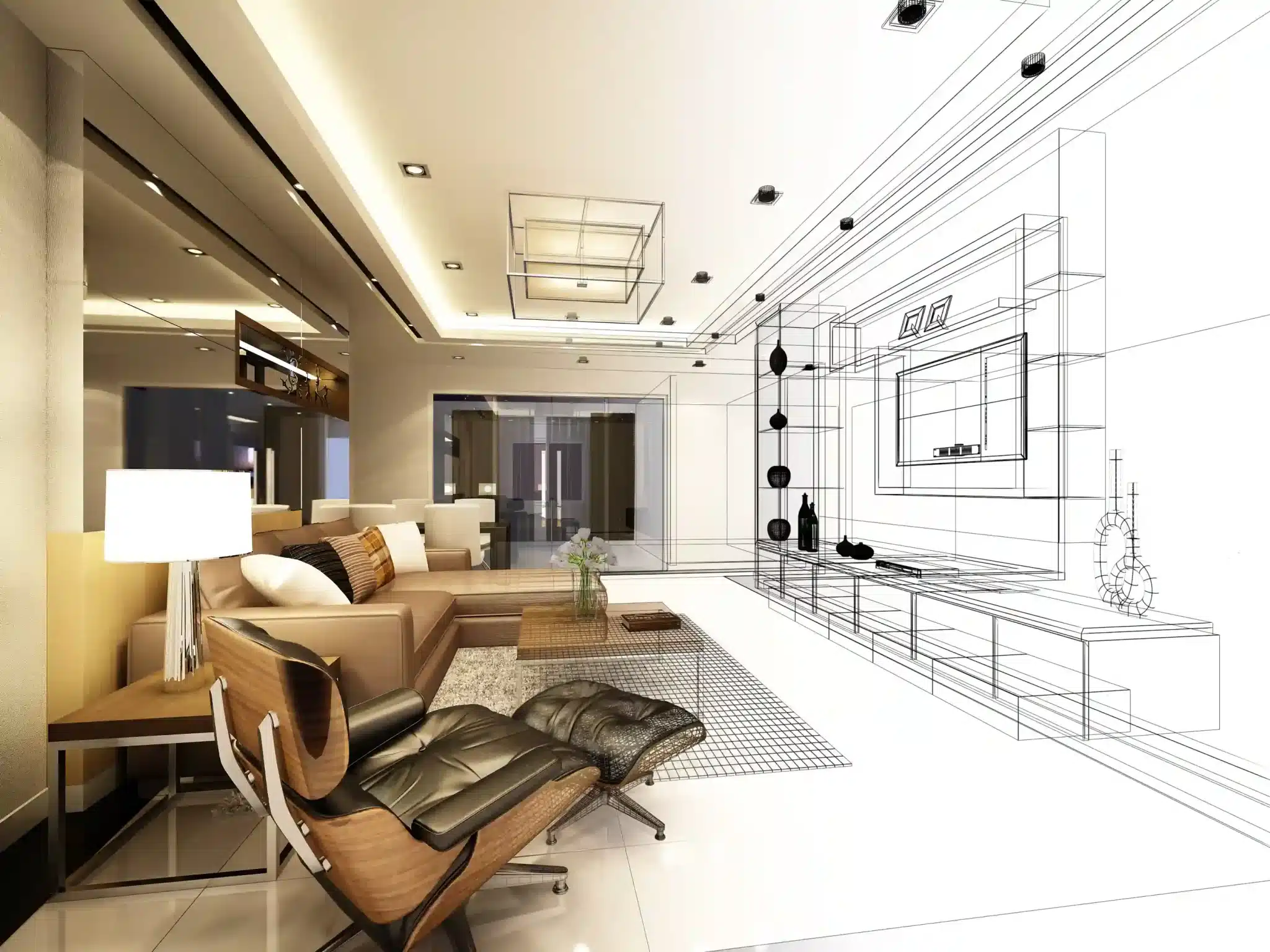
Split-view comparison of perspective rendering showing a hand-drawn interior perspective sketch on one side and a fully rendered photorealistic interior on the other side

Summary 

  • Perspective rendering recreates how people naturally perceive depth, scale, and distance — making architectural and real estate visuals far easier to interpret.
  • It supports every stage of a project: from early design reviews and planning approvals through to pre-launch property marketing.
  • Techniques range from one-point and two-point perspective to lighting simulation and material rendering, each serving a different presentation goal.
  • Pre-launch campaigns rely heavily on perspective rendering because the physical development does not yet exist — strong visuals carry the entire narrative.
  • Multiply Studio delivers perspective rendering solutions that help architects and developers present projects with the clarity and conviction that earns buy-in.

Drawings alone rarely close the gap between a design on paper and a stakeholder who needs to believe in it. That gap is where perspective rendering earns its place. By recreating how people naturally see depth, scale, and spatial relationships, rendered visuals give buyers, planners, and project teams a credible sense of how a future development will actually look and feel.

Across architecture and real estate in Malaysia and the region, perspective rendering has become a standard part of how projects are presented — from planning submissions and investor decks to pre-launch sales campaigns. When the physical building does not yet exist, the rendering often does all the work.

What Is Perspective Rendering, and Why Does It Matter?

Perspective rendering is a visual technique that simulates how the human eye perceives space. Objects appear smaller as they recede into the distance, light falls across surfaces in ways that read as believable, and scale relationships between elements — building to landscape, room to person — become legible at a glance.

In an architectural context, this matters because flat plans and elevations communicate geometry, but not experience. A perspective render translates technical drawings into spatial narrative. A buyer can grasp the feel of a living room. A planning officer can understand how a tower sits in its streetscape. A developer can share a vision with investors who have no obligation to decode a section drawing.

The result is faster alignment, fewer misunderstandings, and presentations that hold attention.

The Details That Make a Perspective Render Actually Work

Not all perspective rendering delivers the same value. The difference lies in the decisions made before a single render is produced — and the technical discipline applied throughout.

Viewing Angle and Composition

The camera position determines what story the image tells. A poorly chosen angle can flatten a generous space or make a dramatic façade read as ordinary. Experienced visualisation teams select views that communicate the design’s strongest qualities, not just its geometry.

Lighting, Materials, and Environmental Context

Lighting simulation governs how realistic a render feels. Natural light shifts throughout the day; artificial light creates warmth and atmosphere. Renders built on accurate lighting models feel credible — those that treat it as an afterthought tend to look staged.

Material rendering translates specification into surface. Concrete reads differently from fair-face finish; polished stone carries different visual weight from honed. Getting materials right helps clients and buyers understand exactly what they are committing to.

Environmental context — surrounding buildings, landscaping, street life, and sky — grounds the render in the real world. A development shown in isolation looks like a concept. The same development shown with accurate neighbouring structures and mature planting looks like a place.

How Perspective Rendering Is Used Across Architecture and Real Estate

The range of applications is broad, but the underlying purpose is consistent: to give stakeholders a clear, credible picture of something that does not yet exist.

Architectural Applications

In architecture, perspective rendering supports design development, planning applications, and stakeholder presentations. Early-stage renders help teams test massing, proportions, and materiality before committing to a direction. Later-stage renders provide the polished visuals needed for authority submissions and client sign-off.

Real Estate and Property Marketing

In real estate, the emphasis shifts toward marketing and sales. Pre-launch campaigns depend on perspective rendering to carry the entire visual identity of a development — because the physical building does not yet exist, the rendering does all the work. Here is where rendering typically sits across the property marketing journey:

Stage

Application

Render Type

Pre-launch

Sales gallery, brochures, billboards

Exterior + interior renders

Investor presentation

Pitch decks, briefing packs

Key views, aerial perspectives

Digital marketing

Social media, property portals, landing pages

Lifestyle renders

Large-format print

Hoardings, banners, showroom displays

High-resolution exterior views

Planning submission

Authority review, contextual studies

Streetscape and massing renders

Across all of these, the renders that perform best are built with the audience in mind — not just the design intent.

Presenting a project that needs to land with buyers, investors, or planning authorities? Explore projects to see how perspective rendering can be applied to your next project.

Perspective Rendering Techniques at a Glance

The right technique depends on the project type, the audience, and the presentation format:

Technique

Best Used For

One-point perspective

Straight-on corridor, interior, or façade views

Two-point perspective

Exterior corner views, building entrances

Wide-angle visualisation

Large open-plan spaces, public realm

Aerial or bird’s-eye perspective

Masterplan and site context presentations

Lighting simulation

Dusk renders, interior atmosphere, showroom ambience

Material and texture rendering

Specification communication, sales gallery displays

Environmental context rendering

Planning submissions, streetscape studies

In practice, a single project may draw on several of these across different deliverables. A pre-launch campaign might combine exterior corner views with interior lifestyle renders and a dusk shot for the brochure cover. A planning submission might prioritise streetscape accuracy above all else. Understanding which technique serves each purpose — and briefing your visualisation team accordingly — keeps the process efficient and the output purposeful.

From Sketch to Photorealistic Render

Perspective rendering did not begin with software. The principles underlying it — vanishing points, horizon lines, foreshortening — were established by architects and artists long before digital tools existed. Many visualisation teams still use conceptual sketches and perspective drawings to work out composition and viewing angles before any 3D modelling begins.

This hybrid approach has practical value. A quick sketch lets a team test several camera positions in minutes. A fully rendered frame locks in one. Working through the compositional logic early means the 3D pipeline — modelling, texturing, lighting, rendering, and post-production — is applied to views that have already been validated, not discovered mid-production.

The result is a more coherent set of deliverables and a faster turnaround from brief to final image.

Work with Multiply Studio for Expert Perspective Rendering

A development that is well-designed but poorly presented is a preventable problem. Perspective rendering exists to close that gap — giving architectural and real estate projects the visual language they need to be understood, trusted, and approved.

At Multiply Studio, we produce perspective rendering solutions for architects and developers across a range of project types, from high-rise residential launches to commercial and mixed-use developments. Our process is grounded in technical accuracy and guided by what each audience needs to see.

If your next project needs visuals that do more than document a design, get in touch with our team to discuss what perspective rendering can do for it.

Share the Post:
Split-view comparison of perspective rendering showing a hand-drawn interior perspective sketch on one side and a fully rendered photorealistic interior on the other side

Summary 

  • Perspective rendering recreates how people naturally perceive depth, scale, and distance — making architectural and real estate visuals far easier to interpret.
  • It supports every stage of a project: from early design reviews and planning approvals through to pre-launch property marketing.
  • Techniques range from one-point and two-point perspective to lighting simulation and material rendering, each serving a different presentation goal.
  • Pre-launch campaigns rely heavily on perspective rendering because the physical development does not yet exist — strong visuals carry the entire narrative.
  • Multiply Studio delivers perspective rendering solutions that help architects and developers present projects with the clarity and conviction that earns buy-in.

Drawings alone rarely close the gap between a design on paper and a stakeholder who needs to believe in it. That gap is where perspective rendering earns its place. By recreating how people naturally see depth, scale, and spatial relationships, rendered visuals give buyers, planners, and project teams a credible sense of how a future development will actually look and feel.

Across architecture and real estate in Malaysia and the region, perspective rendering has become a standard part of how projects are presented — from planning submissions and investor decks to pre-launch sales campaigns. When the physical building does not yet exist, the rendering often does all the work.

What Is Perspective Rendering, and Why Does It Matter?

Perspective rendering is a visual technique that simulates how the human eye perceives space. Objects appear smaller as they recede into the distance, light falls across surfaces in ways that read as believable, and scale relationships between elements — building to landscape, room to person — become legible at a glance.

In an architectural context, this matters because flat plans and elevations communicate geometry, but not experience. A perspective render translates technical drawings into spatial narrative. A buyer can grasp the feel of a living room. A planning officer can understand how a tower sits in its streetscape. A developer can share a vision with investors who have no obligation to decode a section drawing.

The result is faster alignment, fewer misunderstandings, and presentations that hold attention.

The Details That Make a Perspective Render Actually Work

Not all perspective rendering delivers the same value. The difference lies in the decisions made before a single render is produced — and the technical discipline applied throughout.

Viewing Angle and Composition

The camera position determines what story the image tells. A poorly chosen angle can flatten a generous space or make a dramatic façade read as ordinary. Experienced visualisation teams select views that communicate the design’s strongest qualities, not just its geometry.

Lighting, Materials, and Environmental Context

Lighting simulation governs how realistic a render feels. Natural light shifts throughout the day; artificial light creates warmth and atmosphere. Renders built on accurate lighting models feel credible — those that treat it as an afterthought tend to look staged.

Material rendering translates specification into surface. Concrete reads differently from fair-face finish; polished stone carries different visual weight from honed. Getting materials right helps clients and buyers understand exactly what they are committing to.

Environmental context — surrounding buildings, landscaping, street life, and sky — grounds the render in the real world. A development shown in isolation looks like a concept. The same development shown with accurate neighbouring structures and mature planting looks like a place.

How Perspective Rendering Is Used Across Architecture and Real Estate

The range of applications is broad, but the underlying purpose is consistent: to give stakeholders a clear, credible picture of something that does not yet exist.

Architectural Applications

In architecture, perspective rendering supports design development, planning applications, and stakeholder presentations. Early-stage renders help teams test massing, proportions, and materiality before committing to a direction. Later-stage renders provide the polished visuals needed for authority submissions and client sign-off.

Real Estate and Property Marketing

In real estate, the emphasis shifts toward marketing and sales. Pre-launch campaigns depend on perspective rendering to carry the entire visual identity of a development — because the physical building does not yet exist, the rendering does all the work. Here is where rendering typically sits across the property marketing journey:

Stage

Application

Render Type

Pre-launch

Sales gallery, brochures, billboards

Exterior + interior renders

Investor presentation

Pitch decks, briefing packs

Key views, aerial perspectives

Digital marketing

Social media, property portals, landing pages

Lifestyle renders

Large-format print

Hoardings, banners, showroom displays

High-resolution exterior views

Planning submission

Authority review, contextual studies

Streetscape and massing renders

Across all of these, the renders that perform best are built with the audience in mind — not just the design intent.

Presenting a project that needs to land with buyers, investors, or planning authorities? Explore projects to see how perspective rendering can be applied to your next project.

Perspective Rendering Techniques at a Glance

The right technique depends on the project type, the audience, and the presentation format:

Technique

Best Used For

One-point perspective

Straight-on corridor, interior, or façade views

Two-point perspective

Exterior corner views, building entrances

Wide-angle visualisation

Large open-plan spaces, public realm

Aerial or bird’s-eye perspective

Masterplan and site context presentations

Lighting simulation

Dusk renders, interior atmosphere, showroom ambience

Material and texture rendering

Specification communication, sales gallery displays

Environmental context rendering

Planning submissions, streetscape studies

In practice, a single project may draw on several of these across different deliverables. A pre-launch campaign might combine exterior corner views with interior lifestyle renders and a dusk shot for the brochure cover. A planning submission might prioritise streetscape accuracy above all else. Understanding which technique serves each purpose — and briefing your visualisation team accordingly — keeps the process efficient and the output purposeful.

From Sketch to Photorealistic Render

Perspective rendering did not begin with software. The principles underlying it — vanishing points, horizon lines, foreshortening — were established by architects and artists long before digital tools existed. Many visualisation teams still use conceptual sketches and perspective drawings to work out composition and viewing angles before any 3D modelling begins.

This hybrid approach has practical value. A quick sketch lets a team test several camera positions in minutes. A fully rendered frame locks in one. Working through the compositional logic early means the 3D pipeline — modelling, texturing, lighting, rendering, and post-production — is applied to views that have already been validated, not discovered mid-production.

The result is a more coherent set of deliverables and a faster turnaround from brief to final image.

Work with Multiply Studio for Expert Perspective Rendering

A development that is well-designed but poorly presented is a preventable problem. Perspective rendering exists to close that gap — giving architectural and real estate projects the visual language they need to be understood, trusted, and approved.

At Multiply Studio, we produce perspective rendering solutions for architects and developers across a range of project types, from high-rise residential launches to commercial and mixed-use developments. Our process is grounded in technical accuracy and guided by what each audience needs to see.

If your next project needs visuals that do more than document a design, get in touch with our team to discuss what perspective rendering can do for it.

Share the Post:

Related Posts

Join Our Newsletter