
KUALA LUMPUR

Maximising Project Impact with 3D Architecture Walkthroughs

A design team collaborating and planning a 3D architecture walkthrough to maximise project visuals and spatial presentation strategy.

Summary 

  • A 3D architecture walkthrough animates your design as a guided camera journey, giving stakeholders a real sense of space before construction begins.
  • Walkthroughs communicate layout, circulation, lighting, and material expression far more effectively than static renders or 2D drawings.
  • They reduce late-stage revisions by aligning teams, clients, and approvers around a single, shared visual reference.
  • Developers, interior designers, and real estate marketing teams use walkthroughs to strengthen presentations and accelerate decision-making.
  • Multiply Studio produces 3D architecture walkthrough solutions tailored to residential, commercial, hospitality, and mixed-use projects.

For complex projects, a single rendered image rarely tells the full story. Clients struggle to read floor plans. Stakeholders make assumptions. Approvals stall because decision-makers cannot picture the finished space. A 3D architecture walkthrough resolves this by replacing guesswork with experience — guiding viewers through a fully animated, photorealistic version of your project before a single wall is built.

Across architecture, interior design, and real estate, walkthrough visualisation has become a standard tool for teams that need to present ideas clearly, align stakeholders quickly, and move projects forward with fewer interruptions.

What Exactly Is a 3D Architecture Walkthrough?

A 3D architecture walkthrough is an animated visual representation of a building or interior space, created to simulate movement through the environment. Rather than presenting a single viewpoint, a pre-set camera path guides viewers through rooms, corridors, and exterior areas in sequence, much like a guided tour of a completed space.

This format helps communicate layout, proportions, and design intent in a way that feels closer to real-life experience, even before construction begins.

3D Walkthrough and 3D Architectural Visualisation Explained

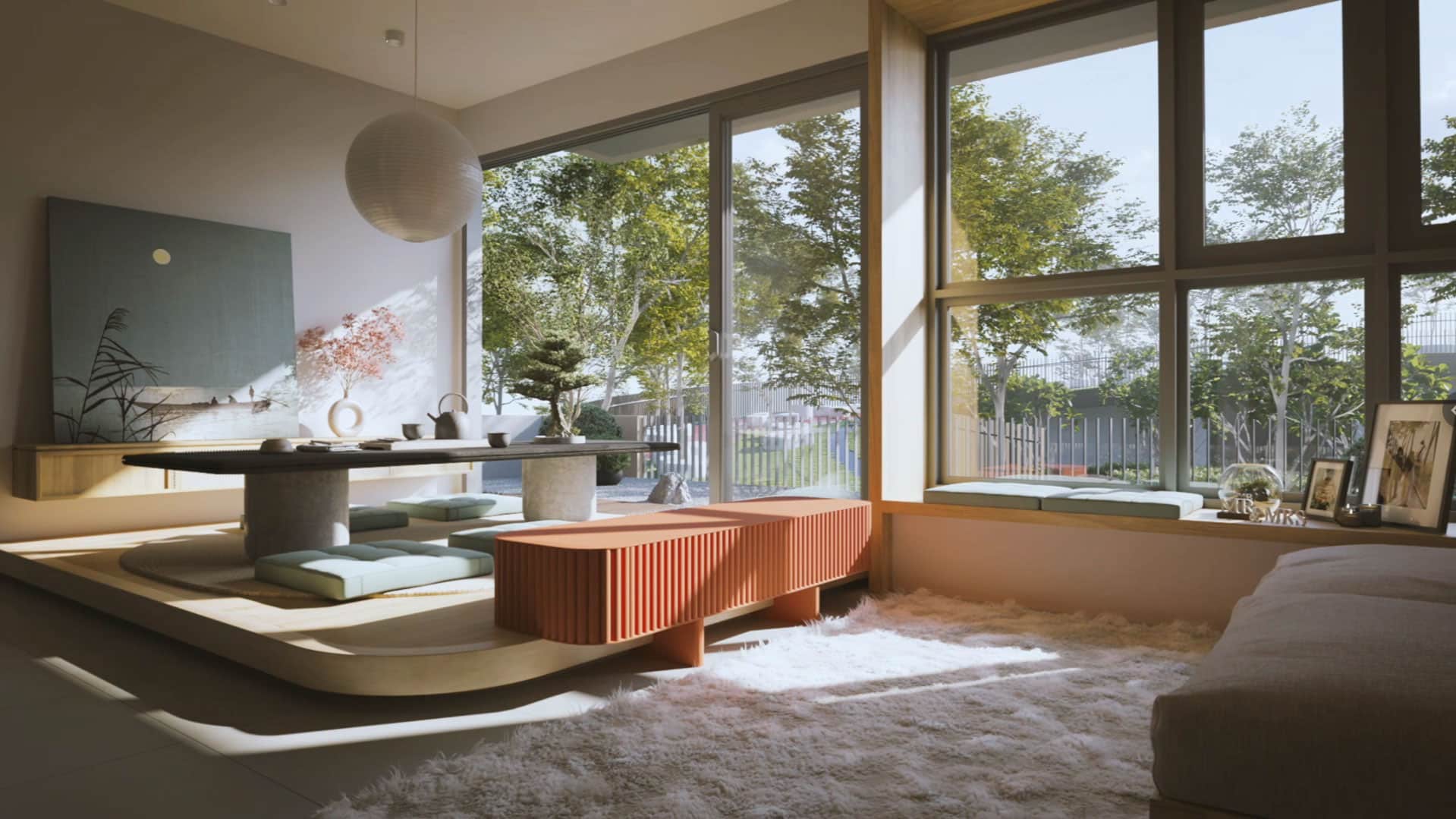
3D architectural visualisation typically refers to still, photorealistic renders of a space. A 3D walkthrough builds on this by introducing motion, sequencing, and narrative flow for your project presentation.

Rather than a single viewpoint, viewers are guided through multiple perspectives of your design. This makes it easier for stakeholders and clients to understand:

  • Spatial relationships between rooms
  • Overall circulation and layout flow
  • Lighting transitions across spaces
  • Atmosphere and material expression.

The addition of movement creates a more immersive interpretation of your project, especially for non-technical audiences.

How Does the Production Process Work?

A well-executed walkthrough follows a structured workflow from your initial drawings through to the final rendered output. Each stage builds on the last to ensure accuracy, visual quality, and alignment with your design intent.

Stage

What happens

Drawing review

Architectural plans and floor layouts assessed for modelling accuracy

3D modelling

Base model of your project constructed digitally

Materials and lighting

Textures, surface finishes, and lighting setups applied

Camera path design

Movement sequences plotted to guide the viewer through key spaces

Environmental details

Animated entourage, greenery, and atmospheric effects added

Rendering and editing

Final output rendered and refined in post-production

When the right toolset is used, your team can maintain consistency and visual quality across different project types and scales.

Why 3D Walkthroughs Are Important for Architecture and Real Estate Projects

The short answer: they reduce ambiguity at every stage of a project.

When a project exists only on paper, misinterpretation is almost inevitable. A client pictures one thing; the architect intends another; the approving authority sees something else entirely. Research supports this — immersive visualisation tools have been shown to improve stakeholder comprehension and decision-making in architectural contexts. A 3D architecture walkthrough gives everyone involved a shared visual reference, and that alignment has tangible consequences for how smoothly a project moves forward.

For project teams and approvals:

  • Design intent is communicated clearly, without relying on technical literacy
  • Complex spatial relationships become immediately legible
  • Approval bodies can assess proposals without needing to interpolate from 2D drawings
  • Revision cycles shorten because issues are identified early, not after construction begins.

For property marketing:

  • Buyers gain a more immersive sense of a property before visiting the site
  • Emotional connection to the space develops earlier in the decision process
  • Pre-launch campaigns become more compelling with dynamic visual content
  • Remote buyers can evaluate layouts and flow without being physically present.

Collaboration becomes more efficient when your team and stakeholders are working from the same visual reference point. If you’re planning a project presentation and want to strengthen how your design intent is communicated, explore the full range of design and visualisation services.

Where are 3D Architectural Walkthroughs Used?

3D walkthroughs are used across many industries because they improve how projects are presented and understood. Different sectors use them for different communication and marketing needs.

Industry 

Common application 

Purpose

Residential Developments

Condo and housing walkthroughs

Support pre-sales and buyer engagement 

Commercial Projects

Office and retail visualisation

Present layouts and tenant experience

Hospitality Projects

Hotel and resort walkthroughs

Showcase guest journey and ambience 

Mixed-Use Developments

Large-scale project walkthroughs

Show connectivity between spaces

Interior design projects 

Interior walkthrough presentations

Review layout decisions before build 

Architecture and construction 

Stakeholder and approval presentations 

Reduce miscommunication during review 

The format is flexible enough to address sector-specific challenges — from visualising customer flow in a retail space to mapping a guest journey through a resort lobby.

Partner with Multiply Studio for 3D Animation Walkthrough Solutions

The quality of a 3D architecture walkthrough depends heavily on the team producing it. Technical accuracy, photorealistic artistry, and a clear understanding of your project brief all need to work together.

At Multiply Studio, we develop walkthrough solutions that support your architecture, interior design, and real estate projects with clear and compelling visual presentation. Through detailed modelling and smooth animation, your project intent is communicated with greater precision and impact.

Ready to strengthen your next presentation? Reach out to the team to explore how a 3D architecture walkthrough can support your project from concept through to approval.

Share the Post:
A design team collaborating and planning a 3D architecture walkthrough to maximise project visuals and spatial presentation strategy.

Summary 

  • A 3D architecture walkthrough animates your design as a guided camera journey, giving stakeholders a real sense of space before construction begins.
  • Walkthroughs communicate layout, circulation, lighting, and material expression far more effectively than static renders or 2D drawings.
  • They reduce late-stage revisions by aligning teams, clients, and approvers around a single, shared visual reference.
  • Developers, interior designers, and real estate marketing teams use walkthroughs to strengthen presentations and accelerate decision-making.
  • Multiply Studio produces 3D architecture walkthrough solutions tailored to residential, commercial, hospitality, and mixed-use projects.

For complex projects, a single rendered image rarely tells the full story. Clients struggle to read floor plans. Stakeholders make assumptions. Approvals stall because decision-makers cannot picture the finished space. A 3D architecture walkthrough resolves this by replacing guesswork with experience — guiding viewers through a fully animated, photorealistic version of your project before a single wall is built.

Across architecture, interior design, and real estate, walkthrough visualisation has become a standard tool for teams that need to present ideas clearly, align stakeholders quickly, and move projects forward with fewer interruptions.

What Exactly Is a 3D Architecture Walkthrough?

A 3D architecture walkthrough is an animated visual representation of a building or interior space, created to simulate movement through the environment. Rather than presenting a single viewpoint, a pre-set camera path guides viewers through rooms, corridors, and exterior areas in sequence, much like a guided tour of a completed space.

This format helps communicate layout, proportions, and design intent in a way that feels closer to real-life experience, even before construction begins.

3D Walkthrough and 3D Architectural Visualisation Explained

3D architectural visualisation typically refers to still, photorealistic renders of a space. A 3D walkthrough builds on this by introducing motion, sequencing, and narrative flow for your project presentation.

Rather than a single viewpoint, viewers are guided through multiple perspectives of your design. This makes it easier for stakeholders and clients to understand:

  • Spatial relationships between rooms
  • Overall circulation and layout flow
  • Lighting transitions across spaces
  • Atmosphere and material expression.

The addition of movement creates a more immersive interpretation of your project, especially for non-technical audiences.

How Does the Production Process Work?

A well-executed walkthrough follows a structured workflow from your initial drawings through to the final rendered output. Each stage builds on the last to ensure accuracy, visual quality, and alignment with your design intent.

Stage

What happens

Drawing review

Architectural plans and floor layouts assessed for modelling accuracy

3D modelling

Base model of your project constructed digitally

Materials and lighting

Textures, surface finishes, and lighting setups applied

Camera path design

Movement sequences plotted to guide the viewer through key spaces

Environmental details

Animated entourage, greenery, and atmospheric effects added

Rendering and editing

Final output rendered and refined in post-production

When the right toolset is used, your team can maintain consistency and visual quality across different project types and scales.

Why 3D Walkthroughs Are Important for Architecture and Real Estate Projects

The short answer: they reduce ambiguity at every stage of a project.

When a project exists only on paper, misinterpretation is almost inevitable. A client pictures one thing; the architect intends another; the approving authority sees something else entirely. Research supports this — immersive visualisation tools have been shown to improve stakeholder comprehension and decision-making in architectural contexts. A 3D architecture walkthrough gives everyone involved a shared visual reference, and that alignment has tangible consequences for how smoothly a project moves forward.

For project teams and approvals:

  • Design intent is communicated clearly, without relying on technical literacy
  • Complex spatial relationships become immediately legible
  • Approval bodies can assess proposals without needing to interpolate from 2D drawings
  • Revision cycles shorten because issues are identified early, not after construction begins.

For property marketing:

  • Buyers gain a more immersive sense of a property before visiting the site
  • Emotional connection to the space develops earlier in the decision process
  • Pre-launch campaigns become more compelling with dynamic visual content
  • Remote buyers can evaluate layouts and flow without being physically present.

Collaboration becomes more efficient when your team and stakeholders are working from the same visual reference point. If you’re planning a project presentation and want to strengthen how your design intent is communicated, explore the full range of design and visualisation services.

Where are 3D Architectural Walkthroughs Used?

3D walkthroughs are used across many industries because they improve how projects are presented and understood. Different sectors use them for different communication and marketing needs.

Industry 

Common application 

Purpose

Residential Developments

Condo and housing walkthroughs

Support pre-sales and buyer engagement 

Commercial Projects

Office and retail visualisation

Present layouts and tenant experience

Hospitality Projects

Hotel and resort walkthroughs

Showcase guest journey and ambience 

Mixed-Use Developments

Large-scale project walkthroughs

Show connectivity between spaces

Interior design projects 

Interior walkthrough presentations

Review layout decisions before build 

Architecture and construction 

Stakeholder and approval presentations 

Reduce miscommunication during review 

The format is flexible enough to address sector-specific challenges — from visualising customer flow in a retail space to mapping a guest journey through a resort lobby.

Partner with Multiply Studio for 3D Animation Walkthrough Solutions

The quality of a 3D architecture walkthrough depends heavily on the team producing it. Technical accuracy, photorealistic artistry, and a clear understanding of your project brief all need to work together.

At Multiply Studio, we develop walkthrough solutions that support your architecture, interior design, and real estate projects with clear and compelling visual presentation. Through detailed modelling and smooth animation, your project intent is communicated with greater precision and impact.

Ready to strengthen your next presentation? Reach out to the team to explore how a 3D architecture walkthrough can support your project from concept through to approval.

Share the Post:

Related Posts

Join Our Newsletter